
发布日期:2026-02-23 13:24 点击次数:79
编者按:中国功夫,动作一种根植于中国历史与文化泥土的私有身段玄学,早已稀奇单纯的格斗身手,成为中华英才颖悟与价值不雅的厚爱载体。随着中国与宇宙策划的日益细巧,中国功夫动作一张闪亮的文化柬帖,谢宇宙边界内掀翻“功夫热”。“汉语桥”全球冠军迪米特里(Vasetskii Dmitrii),恰是通过功夫深入中国文化的肌理,感知其经天纬地的内在。这种跨文化的互动发扬出:当中国功夫走放洋门,它便已成为全东说念主类共同的精神钞票。中国文化的私有魔力,也正在于此:它允许不同文化在各异中寻找共识,在对话中丰富彼此。
“寰球好,我叫迪米特里,来自俄罗斯。”采访运行,迪米特里主动地用汉文作念了自我先容。坐在他操纵的Rustam Asadchikov,Rustam本年16岁,相似来自俄罗斯。诚然仍是是第二次到中国,两东说念主对这片地盘的风土情面依然充满了有趣。“能再次来到中国,我极度同意。”Rustam浅笑着说。
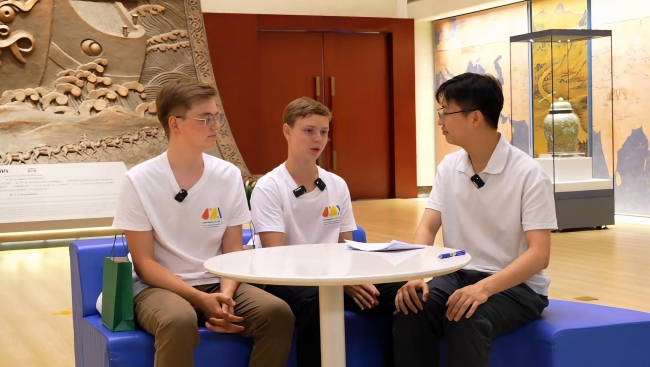
图为Rustam(左)和迪米特里(右)经受采访现场
采访前,咱们得知迪米特里一直在学习中国功夫。咱们有趣地问他为什么会想学功夫。迪米特里想了想,说:“我看过一些相关中国功夫的电影,内部的情状让我印象深远。我认为那些动作很帅,充满了强人气概。”“不错给咱们展示一下吗?”咱们问说念。迪米特里阴寒地舆睬了,并走到一旁运行饰演。他观点专注,动作干净利落。一套招式打完,咱们不由得为他饱读掌。
在迪米特里演示的经过中,对功夫不太熟谙的Rustam也在一旁随着迪米特里比划。尽管动作荒废,但他专注又欢乐的神面目染了每一个东说念主。“我不太会功夫,”他不好预见地说,“但我看到了迪米特里练武后的变化。这些动作竟然自带一种力量!”
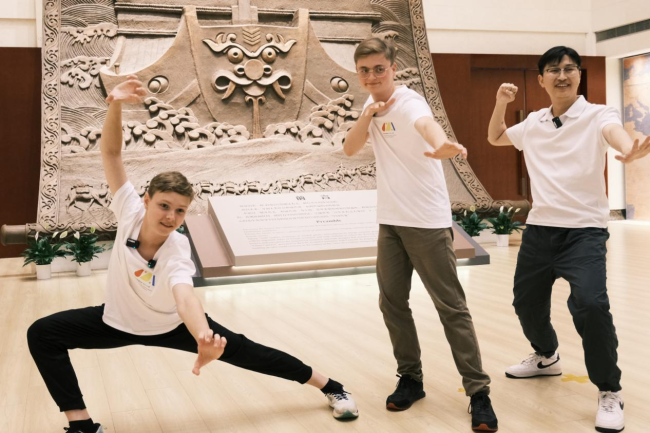
图为迪米特里(左)、Rustam(中)与采编东说念主员展示功夫动作
迪米特里和Rustam的现场响应,是中国功夫广大感染力的一个缩影。这种越过言语和文化的即时共识,离不开数十年来功夫电影在全球边界内的深厚积淀。回归这一历程,李小龙无疑是创举性的东说念主物。他为中国功夫和中国电影的海外化发展作念出了不可销亡的孝敬,也让“Kungfu”一词见效投入英语辞书。在他之后,成龙以幽默的饰演拓展了功夫的银幕魔力,李连杰和甄子丹则以专科武技和变装深度,天博体育赋予功夫更丰富的现代抒发。他们共同构筑起中国功夫的海外形象,使得功夫叙事成为全球流行文化的厚爱分支。
在跨文化传播中,由于言语和融会的隔膜,信息罗致者时时难以充分意会源文化中的深层内涵,从而出现“文化扣头”。但这一景观在功夫电影中却得以减弱。激烈的视觉言语、普世的强人主题以及动作自己的好意思学感染力,使其能够稀奇言语和融会的隔膜,直击东说念主心。更厚爱的是,这些电影不仅在传递感官刺激,更潜移暗化地向外输出了东方的玄学想想与伦理不雅念。它让宇宙通过最直不雅的形状,感受到东方文化的魔力与深度。

图为《鹿死谁手》海外版海报
大银幕上的光影传奇激勉了广大像迪米特里这么的年青东说念主领先的风趣,而真实的意会,发生在他从不雅众变为推行者之后。“往常看《鹿死谁手》,我不是很意会李小龙的‘无我’,”他坦言说念,“但在练武后,我冉冉体会到其中‘趁势而为’的颖悟。”除此除外,迪米特里还学习到更多相关中国文化的本色:“抱拳礼”需要用左手掩右拳,这代表蔼然和谐;“五行拳”师法当然万物的形态与神韵,体现着天东说念主合一的天地不雅;“止戈为武”的理念则指向对和平的追求。这些无法仅凭言语传递的文化见识,正通过技击这一具体的神色,悄然融入他的融会。
像迪米特里这么通过学习功夫走进中国文化的异邦青少年还有好多。他们也许还不行精准地意会动作背后的武学想想,却在千里肩坠肘、呼吸吐纳之间感受到身段与心灵的和谐协调。这种凭借身段悲痛已毕的文化共识,使功夫成为一种“宇宙言语”,匡助来自不同文化布景的东说念主们找到与中国文化对话的私有形状。

图为迪米特里饰演功夫现场
采访戒指时,迪米特里示意:“我会不竭学习中国功夫的!”从他刚烈的观点里,咱们看到细密向听说递的强粗略量。在这个充满隔膜的时期,中国功夫以其私有的包容性,为不同细密搭建起对话的桥梁。它不要肄业习者毁灭我方的文化身份,而是邀请东说念主们在身段与心灵的互动中,创造出一个分享的意会空间。好像这恰是中国功夫珍稀确现代价值——在言语与招式除外,为东说念主类提供一种无需翻译的交流形状,更以陈腐而艰深的东方颖悟,为东说念主类共同濒临的逆境提供新的解题想路。
撰稿东说念主:何博媛
Beyond Words: How Kung Fu Helps the World Understand China
Editor’s Note: Chinese kung fu, a unique physical philosophy rooted in China’s history and culture, has long transcended simple martial arts to become an important carrier of Chinese wisdom and values. As China's ties with the world grow closer, kung fu has become a shining cultural ambassador, sparking a "kung fu craze" globally. Vasetskii Dmitrii, a global champion of the "Chinese Bridge" competition, has delved deep into the fabric of Chinese culture through kung fu, grasping its profound and intricate inner meaning. This cross-cultural exchange shows that when Chinese kung fu goes global, it becomes a shared spiritual treasure for all humanity. This is precisely where the unique charm of Chinese culture lies: it allows different cultures to find common ground in their differences and enrich each other through dialogue.
"Hello everyone, my name is Dmitrii, and I'm from Russia." Dmitrii began the interview by introducing himself in Chinese. Sitting next to him was his friend, 16-year-old Rustam Asadchikov, also from Russia. Although it was their second time in China, both were still filled with curiosity about the country's customs and culture. "I'm very happy to be back in China," Rustam said with a smile.
Before the interview, we learned that Dmitrii had been studying Chinese kung fu. We were curious why he wanted to learn. Dmitrii thought for a moment before saying, "I've seen some movies about Chinese kung fu, and the scenes left a deep impression on me. I thought the movements were cool and full of heroism."
"Could you show us some?" we asked. Dmitrii readily agreed and stepped aside to perform. His gaze was focused, and his movements were clean and sharp. After he finished a set of forms, we couldn't help but applaud.
During Dmitrii's demonstration, Rustam, who wasn't very familiar with kung fu, began to mimic the movements. Although his motions were clumsy, his focused and excited expression was infectious. "I'm not very good at kung fu," he said, a little embarrassed, "but I've seen the change in Dmitrii after he started practicing. These movements truly have a power of their own!"
The immediate reactions of Dmitrii and Rustam are a microcosm of Chinese kung fu's powerful appeal. This instant resonance, which transcends language and culture, is due in no small part to the decades of global exposure through kung fu cinema. Looking back, Bruce Lee was undoubtedly a groundbreaking figure. He made indelible contributions to the internationalization of Chinese kung fu and film, and his success even led to the word "kung fu" being added to the English dictionary.
Following him, Jackie Chan expanded kung fu’s cinematic appeal with his comedic performances, while Jet Li and Donnie Yen gave it richer modern expressions with their professional martial skills and character depth. Together, they built kung fu's international image, making its narratives a significant branch of global popular culture.
In cross-cultural communication, "cultural discount" often occurs because language and cognitive barriers can prevent recipients from fully understanding the deeper meanings of the source culture. However, this phenomenon is weakened in kung fu films. The powerful visual language, universal heroic themes, and the aesthetic appeal of the actions themselves allow the films to bypass linguistic and cognitive gaps and speak directly to the heart. More importantly, these films don't just provide sensory stimulation; they also subtly export Eastern philosophical and ethical concepts, allowing the world to experience the depth and charm of Eastern culture in the most intuitive way.
The legends on the silver screen sparked the initial interest of countless young people like Dmitrii, but true understanding occurred when he transitioned from a spectator to a practitioner. "Before, when I watched Enter the Dragon(《鹿死谁手》), I didn't fully grasp Bruce Lee's concept of 'selflessness,'" he admitted. "But after I started practicing, I gradually came to appreciate the wisdom of 'going with the flow' that's behind it."
Dmitrii also learned more about Chinese culture. He now knows that the Bao Quan Li (抱拳礼), where the left hand covers the right fist, symbolizes humility and harmony. The Wu Xing Quan (五行拳) mimics the forms and spirit of nature, reflecting the cosmic view of "the unity of man and nature." The concept of Zhi Ge Wei Wu—which translates to "stop the war, become a martial artist"—points to the pursuit of peace. These cultural concepts, which cannot be conveyed through language alone, have quietly become part of his understanding through the concrete form of martial arts.
There are many foreign youths like Dmitrii who have entered Chinese culture by learning kung fu. While they may not yet precisely understand the martial philosophy behind each movement, they feel a harmonious unity of body and mind through the practice of lowering shoulders and elbows, and managing their breathing. This cultural resonance achieved through physical memory makes kung fu a "world language," helping people from different cultural backgrounds find a unique way to dialogue with Chinese culture.
As the interview concluded, Dmitrii said, "I will continue to learn Chinese kung fu!" In his determined eyes, we saw the powerful force of civilization being transmitted outward. In an era filled with divisions, Chinese kung fu, with its unique inclusivity, builds a bridge for dialogue between different civilizations. It doesn't ask practitioners to abandon their own cultural identity but invites them to create a shared space of understanding through the interaction of body and mind. This might be the precious contemporary value of Chinese kung fu: beyond language and movements, it provides humanity with a way to communicate without translation and offers new solutions to shared human dilemmas through ancient and profound Eastern wisdom.
 备案号:
备案号: