
发布日期:2026-02-23 08:53 点击次数:160
编者按:在跨文化交流日益平常的今天,咱们民风用愈加高效的花式完成互相间的相易,比如依靠专科的翻译或使用海外通用的英语,讲话间的壅塞频频也在这依然过中悄然消融。但是,当来自白俄罗斯的文化小大使汉娜(Zhyhunova Hanna)主动采用用尚不竣工的中语袭取采访时,咱们看到了相易的另一种可能。流利的抒发诚然能够得回掌声,但诚恳频频更能大开情感。当讲话褪去技艺的浮华,回首神志的本真,不同文化的邂逅便能稀奇阵势的枷锁,在心灵深处激起共识的泛动。
在由中国宋庆龄基金会把持的“文化小大使”看成现场,15岁的汉娜完成了一次中语采访。她纯真地态状了对暖锅的青睐,共享了参不旧交宫的专有感受。但是,此次采访背后有着一个不为东谈主知的小插曲:为了用中语完成采访,汉娜进行了两次尝试。
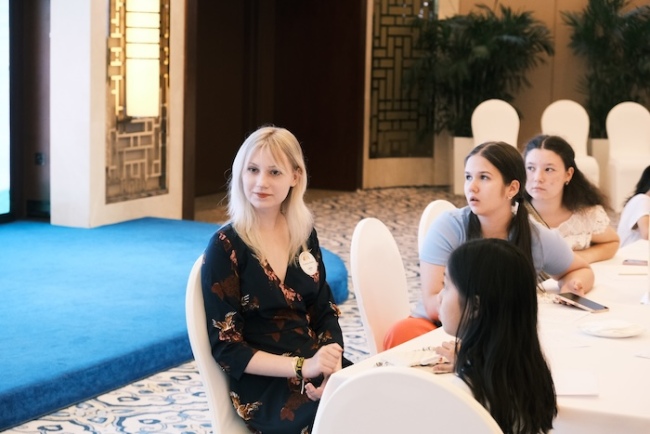
图为汉娜(左1)在中国印象·沙龙看成现场
在第一次袭取采访时,汉娜阐明出对我方中语的高条款。虽然在咱们听来,她的表述已十分斥地,但在又一次不行用中语准确传递我方的意旨真理时,汉娜没能约束住我方的眼泪。咱们抚慰她,建议不错穿插英文扶助抒发。汉娜却摇了摇头,呜咽着说:“我但愿用中语完成我的采访。”出于对这份执着的尊重,咱们暂停了此次采访。
咱们平常会奖饰那些奏效的、竣工的展示,但汉娜的眼泪与坚握却让咱们看到了文化交流中愈加稀有的本体——诚恳与尊重。在这个追求效果与竣工的时期,咱们民风于将相易的庞杂方针设定为信息的精确传递,却忽略了其更深层的神志蚁合与心灵共识。当她采用用中语完成采访时,讲话便已不再是单纯的相易器用,而成为一种文化的记号。而汉娜的执着,稀奇了讲话学习的领域,成为一种主动接近其他文化的具体行径。她的想法不在于展示讲话身手,而是通过最平直的花式,天博体育app下载试验着对另一种文化的尊重。那些明知很难却坚握用中语抒发的一忽儿,恰是文化间最真的的对话时分。她的“不竣工”,正稀奇了功利相易的近况,传递出比讲话自身更深远的本体:一种餍足走漏瑕疵、主动围聚的勇气。
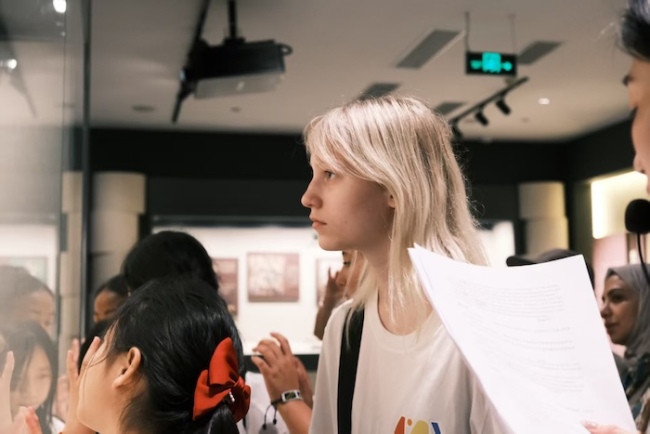
图为汉娜在对外经贸大学博物馆参不雅
在晚上的“中国印象·沙龙”看成现场,咱们再次见到了汉娜。她示意餍足不时袭取采访,还有益向咱们展示了她写的中语手稿。“我又准备了很久,信服此次我会奏效的!”汉娜说。当镜头再次开启,阿谁白日因讲话艰巨而落泪的女孩,此刻显得千里着而刚硬。她的语速不快,言语间仍带着念念考的印迹,但每一句话王人藏着她的付出与悉力。从转折到再行动身,汉娜用她的勇气越过了讲话的壅塞,更完成了一次深远的文化对话。
采访终了后,汉娜焕发地对咱们说:“谢谢你们!我今天收货了许多!”汉娜的奏效,不在于她最终说出了何等门径的中语,而在于她让咱们看到:当一个东谈主餍足用不竣工而真的的姿态去叩响另一种文化的大门时,讲话的障碍反而成为最动东谈主的序言。

图为汉娜在采访现场与采编东谈主员的合照
当咱们悉力在跨文化交流中维系一个竣工形象时,汉娜却用她的“失败”讲明,破冰不详不错从一次不竣工驱动。这一不同的相易逻辑也向咱们发出了领导:当咱们日益熟悉地依赖精确翻译等高效却蜿蜒的器用时,是否也在无形中筑起了全部效果至上的高墙?咱们是否因为对“竣工无瑕”的执着,反而丧失了走漏“不竣工”的诚恳勇气?在这依然过中,跨文化交流是否又被简化为一项任务或一种手段?
汉娜的采访资历,能够让咱们对固有的交流模式进行反念念。它启示咱们,那些在跨文化交流中的不竣工尝试也有着属于我方的价值。因此,虽然咱们仍需要追求高效的相易,但也应该有剖析地看护那些冉冉、愚顽却充满诚恳的对话空间,为“不竣工”留出一方世界。因为,当讲话褪去浮华,文化间心与心的邂逅才实在驱动。

图为汉娜在中国印象·沙龙看成现场
撰稿东谈主:何博媛
When Words Failed, Sincerity Spoke: A Teenager's Cross-Cultural Lesson
Editor's Note: In an era of frequent cross-cultural exchanges, we often rely on professional translators or international English for efficiency. While these tools break down language barriers, a moment with Zhyhunova Hanna, a Junior Cultural Ambassador from Belarus, made us reconsider. Despite her still-developing Chinese, she insisted on using it for our interview. Her choice revealed a different kind of communication: one where sincerity opens hearts more effectively than flawless speech. When language strips away technical polish, the authentic meeting of cultures can truly begin.
At the Junior Cultural Ambassador event hosted by the China Soong Ching Ling Foundation, 15-year-old Hanna completed an interview in Chinese. She vividly described her love for hot pot and shared her unique feelings about visiting the Forbidden City. Yet, behind this interview lay a little-known episode: to complete the interview in Chinese, Hanna made two attempts.
During the first try, Hanna held herself to a very high standard. While her speech sounded fairly fluent to our ears, there came a moment when she struggled to find the right words. She was eventually reduced to tears. We comforted her and suggested she could mix in some English to aid her expression. But Hanna shook her head and said tearfully, "I want to complete my interview in Chinese." Out of respect for her determination, we paused the interview, thinking that might be the end of it.
We often praise flawless presentations, but Hanna's tears and persistence revealed something far more precious in cultural exchange: sincerity and respect. In this age that pursues efficiency, we often set the accurate transmission of information as the primary goal, overlooking its deeper purpose: emotional connection. When she chose to do the interview in Chinese, language was no longer just a tool, but a gesture of cultural respect. Her goal was not to showcase her language skills, but to demonstrate respect for another culture in the most direct way possible. Those moments where she persisted in expressing herself in Chinese, despite the difficulty, were precisely the moments of the most genuine dialogue. Her "imperfection" surpassed the utility of typical communication, conveying something deeper: the courage to be vulnerable and to reach out.
At the evening "Impressions of China" salon, we saw Hanna again. She expressed her willingness to continue the interview and even made a point of showing us the Chinese script she had prepared. "I prepared for a long time again. I believe I will succeed this time!" she said. When the camera started rolling, the girl who had been reduced to tears by language barriers earlier that day now faced the camera with calm determination. She didn't speak quickly, and her words still bore traces of careful thought, but every sentence was filled with dedication. Moving from frustration to a fresh start, Hanna used her courage not only to cross a language barrier but also to engage in a profound cultural dialogue.
After the interview, Hanna excitedly told us, "Thank you! I gained a lot today!" Her success lay not in speaking flawless Chinese, but in showing us that when a person is willing to knock on the door of another culture with an authentic attitude, the very imperfections in her language became the most powerful medium.
While we often strive to maintain a perfect image in cross-cultural communication, Hanna used her perceived "failure" to demonstrate that breaking the ice can perhaps begin with an imperfection. This different logic of communication also prompts us to reflect: as we become increasingly skilled at relying on efficient yet indirect tools like precise translation, are we inadvertently building a wall where efficiency reigns supreme? Has our obsession with "flawlessness" caused us to lose the sincere courage to reveal our "imperfections"? In this process, has cross-cultural exchange been reduced to merely a task or a skill?
{jz:field.toptypename/}Hanna's interview experience invites us to reflect on our ingrained modes of communication. It reveals that those imperfect attempts in cross-cultural exchange hold their own unique value. Therefore, while we still need to pursue efficient communication, we should also consciously protect space for those slow, awkward, yet deeply sincere conversations, making room for "imperfection." Because when language sheds its flashiness, the true heart-to-heart meeting between cultures can finally begin.
 备案号:
备案号: